This royal throne of kings, this sceptred isle, This earth of majesty, this seat of Mars, This other Eden, demi-paradise, This fortress built by Nature for herself Against infection and the hand of war, This happy breed of men, this little world, This precious stone set in the silver sea, Which serves it in the office of a wall Or as a moat defensive to a house, Against the envy of less happier lands,-- This blessed plot, this earth, this realm, this England. ~~William Shakespeare, Richard III


Showing posts with label plantagenet. Show all posts

Friday, August 22, 2014

Anniversary of a Death

I can't let the anniversary of the death of my favorite monarch go by without a post. This is copied from my post on the anniversary last year.


Richard III (Oct 2, 1452 - Aug 22, 1485)

On this day in 1485, the most maligned King in English history was killed at the Battle of Bosworth field. He was betrayed by some of his lords and was "piteously slain and murdered" (as is recorded in the York City records), paving the way for the usurper Henry Tudor, Earl of Richmond (Henry VII). Thus began the Tudor Dynasty, based on a very weak and illegitimate claim to the throne, and the complete destruction of Richard's reputation.

The battle was mainly a hand-to-hand encounter (which was typical of the times), with the Stanley family (who had promised Tudor that they would desert Richard) keeping away from the fight until, at a critical moment when it was obvious which way the victory was headed, they joined Tudor. Richard, realizing that he was betrayed, cried out, "Treason, treason!" He knew he'd either leave as the King of England or dead and refused to leave the field until, overpowered by numbers, he fell dead in the middle of his enemies. He came very close to dispatching his enemy, Henry Tudor, killing his standard barer, William Brandon (the father of Henry VIII's close friend, Charles Brandon). Even his enemies had to admit that he fought with courage (Tudor's historian even wrote that "King Richard, alone, was killed fighting manfully in the thickest press of his enemies"). The crown was supposedly picked up on the field of battle and placed by Sir William Stanley on the head of Tudor, who was at once proclaimed king by the whole army. After the battle Richard's body was taken to Leicester, carried naked across a horse's back, and buried without honor in the church of the Greyfriars. His death was the end of the Plantagenet Dynasty which had ruled England since the succession of Henry II in 1154. In a twist which can tell us a lot about the man who benefited from Richard's death, Tudor dated his reign from the day BEFORE the battle so he could charge all the men who had fought for an anointed and crowned king with treason.

Richard most likely was not the villain that his enemies made him out to appear. He had good qualities (and bad qualities), both as a man and a ruler, and seemed to have a sound judgment of political needs (he had been able to keep the North of England in peace for his brother). In testament to those ideas, a historian of the time, John Rous said he was a "good lord" and had a "great heart" (though he changed his tune once Tudor was on the throne). And the city of York, after hearing of Richard's defeat at Bosworth, risked the fury of the new monarch by entering into it's city council records "king Richard late mercifully reigning upon us ... was piteously slane murdred to the grete hevynesse of this citie." However, it is impossible to convict or clear him of the deaths of his nephews, Edward V and Richard, Duke of York, in the Tower of London. He was not a monster but a typical man in an age of strange contradictions of character, an age of refined (for the day) culture mixed with horrible cruelty, and he possessed an emotional temper that was capable of anything (he was a Plantagenet after all).  After his defeat at Bosworth, Tudor and his supporters needed to solidify his claim to the throne and what better way to do that than to make the English people think that the King he replaced was a deformed, evil monster who killed his own nephews? No one did more to cement that belief than William Shakespeare with his play Richard III (Undoubtedly writing to please the Tudors but getting HIS information from Thomas Moore who was only 5 when the events actually occurred; Moore's information came from Bishop Morton, who hated Richard.). They were hugely successful in their endeavors and, unfortunately, this view of Richard stuck until probably the 20th century when scholars really began to study him. Tradition represents Richard as a hunchback but there were no contemporary accounts of him being "deformed." The discovery of Richard's skeleton under the car park in Leicester proved that he was NOT a hunchback (like Shakespeare made everyone believe) but
had scoliosis, which made his fighting ability that much more amazing as he was probably in quite a lot of pain. The discovery also showed that he had multiple wounds all over his body (including one on his "backside") that shows that his body was not treated with any dignity. While the discovery of his body can't confirm or deny the story that he murdered his nephews, it certainly shows that not everything that has been handed down through history is exactly accurate. If Shakespeare's hunchbacked Richard wasn't true, what else may not be true? Many have popped up in the last few months questioning the dig and discovery by the University of Leicester, saying, among other things, that the entire dig was a hoax and this isn't Richard's body. I for one believe that it IS the last York King of England and am looking forward to his reburial in Leicester Cathedral next year.


Loyaulte me lie


Thursday, August 22, 2013

Richard III, Last Plantagenet King of England


Richard III (Oct 2, 1452 - Aug 22, 1485)

On this day in 1485, the most maligned King in English history was killed at the Battle of Bosworth field. He was betrayed by some of his lords and was "piteously slain and murdered" (as is recorded in the York City records), paving the way for the usurper Henry Tudor, Earl of Richmond (Henry VII). Thus began the Tudor Dynasty, based on a very weak and illegitimate claim to the throne, and the complete destruction of Richard's reputation.

The battle was mainly a hand-to-hand encounter (which was typical of the times), with the Stanley family (who had promised Tudor that they would desert Richard) keeping away from the fight until, at a critical moment when it was obvious which way the victory was headed, they joined Tudor. Richard, realizing that he was betrayed, cried out, "Treason, treason!" He knew he'd either leave as the King of England or dead and refused to leave the field until, overpowered by numbers, he fell dead in the middle of his enemies. He came very close to dispatching his enemy, Henry Tudor, killing his standard barer, William Brandon (the father of Henry VIII's close friend, Charles Brandon). Even his enemies had to admit that he fought with courage (Tudor's historian even wrote that "King Richard, alone, was killed fighting manfully in the thickest press of his enemies"). The crown was supposedly picked up on the field of battle and placed by Sir William Stanley on the head of Tudor, who was at once proclaimed king by the whole army. After the battle Richard's body was taken to Leicester, carried naked across a horse's back, and buried without honor in the church of the Greyfriars. His death was the end of the Plantagenet Dynasty which had ruled England since the succession of Henry II in 1154. In a twist which can tell us a lot about the man who benefited from Richard's death, Tudor dated his reign from the day BEFORE the battle so he could charge all the men who had fought for an anointed and crowned king with treason.

Richard most likely was not the villain that his enemies made him out to appear. He had good qualities (and bad qualities), both as a man and a ruler, and seemed to have a sound judgment of political needs (he had been able to keep the North of England in peace for his brother). In testament to those ideas, a historian of the time, John Rous said he was a "good lord" and had a "great heart" (though he changed his tune once Tudor was on the throne). And the city of York, after hearing of Richard's defeat at Bosworth, risked the fury of the new monarch by entering into it's city council records "king Richard late mercifully reigning upon us ... was piteously slane murdred to the grete hevynesse of this citie." However, it is impossible to convict or clear him of the deaths of his nephews, Edward V and Richard, Duke of York, in the Tower of London. He was not a monster but a typical man in an age of strange contradictions of character, an age of refined (for the day) culture mixed with horrible cruelty, and he possessed an emotional temper that was capable of anything (he was a Plantagenet after all).  After his defeat at Bosworth, Tudor and his supporters needed to solidify his claim to the throne and what better way to do that than to make the English people think that the King he replaced was a deformed, evil monster who killed his own nephews? No one did more to cement that belief than William Shakespeare with his play Richard III (Undoubtedly writing to please the Tudors but getting HIS information from Thomas Moore who was only 5 when the events actually occurred; Moore's information came from Bishop Morton, who hated Richard.). They were hugely successful in their endeavors and, unfortunately, this view of Richard stuck until probably the 20th century when scholars really began to study him. Tradition represents Richard as a hunchback but there were no contemporary accounts of him being "deformed." The discovery of Richard's skeleton under the car park in Leicester proved that he was NOT a hunchback (like Shakespeare made everyone believe) but
had scoliosis, which made his fighting ability that much more amazing as he was probably in quite a lot of pain. The discovery also showed that he had multiple wounds all over his body (including one on his "backside") that shows that his body was not treated with any dignity. While the discovery of his body can't confirm or deny the story that he murdered his nephews, it certainly shows that not everything that has been handed down through history is exactly accurate. If Shakespeare's hunchbacked Richard wasn't true, what else may not be true?


Loyaulte me lie


Wednesday, August 22, 2012

Rest in Peace Richard


Richard III (Oct 2, 1452 - Aug 22, 1485)

On this day in 1485, the most maligned King in English history was killed at the Battle of Bosworth field. He was betrayed by some of his lords and was "piteously slain and murdered" (as is recorded in the York City records), paving the way for the usurper Henry Tudor, Earl of Richmond (Henry VII). Thus began the Tudor Dynasty, based on a very weak and illegitimate claim to the throne, and the complete destruction of Richard's reputation.

The battle was mainly a hand-to-hand encounter (which was typical of the times), with the Stanley family (who had promised Tudor that they would desert Richard) keeping away from the fight until, at a critical moment when it was obvious which way the victory was headed, they joined Tudor. Richard, realizing that he was betrayed, cried out, "Treason, treason!" He knew he'd either leave as the King of England or dead and refused to leave the field until, overpowered by numbers, he fell dead in the middle of his enemies. He came very close to dispatching his enemy, Henry Tudor, killing his standard barer, William Brandon (the father of Henry VIII's close friend, Charles Brandon). The crown was supposedly picked up on the field of battle and placed by Sir William Stanley on the head of Tudor, who was at once proclaimed king by the whole army. After the battle Richard's body was carried to Leicester, carried naked across a horse's back, and buried without honor in the church of the Greyfriars. His death was the end of the Plantagenet Dynasty which had ruled England since the succession of Henry II in 1154.

Richard was not the villain that his enemies made him out to appear. He had good qualities, both as a man and a ruler, and seemed to have a sound judgment of political needs (he had been able to keep the North of England in peace for his brother). However, it is impossible to clear him of the crime, the popular belief that was mostly likely the chief cause of his ruin - the death of his nephews, Edward V and Richard, Duke of York, in the Tower of London. He was not a monster but a typical man in an age of strange contradictions of character, an age of refined (for the day) culture mixed with horrible cruelty, and he possessed an emotional temper that was capable of anything (he was a Plantagenet after all). Tradition represents Richard as deformed but this has never been proven. After his defeat at Bosworth, Tudor and his supporters needed to solidify his claim to the throne and what better way to do that than to make the English people think that the King he replaced was a deformed, evil monster who killed his own nephews? No one did more to cement that belief than William Shakespeare with his play Richard III (who was undoubtedly writing to please the Tudors). They were hugely successful in their endeavors and, unfortunately, this view of Richard stuck until probably the 20th century when scholars really began to study him.

Loyaulte me lie


Tuesday, May 22, 2012

Book Review: Crown in Candlelight

Crown in Candlelight, Rosemary H. Jarman
4.5 roses

This is only the second of Ms. Jarman's novels I have been able to get my hands on and read but if they're all as good as this one, I shall enjoy exploring her works further. This novel focuses on a time I have not read anything about beyond Shakespeare's play on Henry V. The story is about Catherine of Valios, the French princess who married England's King Henry V.  All I knew about Catherine before picking up this novel was that she was a daughter of mad King Charles of France, she married Henry V (who I can only picture as Kenneth Branagh!), gave birth to the future Henry VI, and may (or may not) have married Owen Tudor, thus giving birth to that future dynasty. That was the extent of my knowledge so I was happy to read something that truly focused on her life not only before she met and wed Henry but her life after he died. I loved every minute I was lost in its pages.

MAY CONTAIN SPOILERS.

While there are two or three other narrators besides Catherine, the novel really is about her and the other narrators just give the reader a better idea of the events surrounding her. The first part of the book covers her early life and the struggles she had to get through with her father King Charles, who seemed to be a caring man when he was in his right mind, and her very formidable mother Isabeau who was only concerned with maintaining her power and money. Seeing the life she had before she met Henry its no wonder she was so deeply in love and devoted to him. Her closeness to her older sister Isabelle (who was married to Richard II) throws an interesting twist into her emotions later down the line. For me, the story really picked up once she was married to Henry. I don't know if that's because of the writing or just because things historically began happening at a pretty rapid pace from that point on. We also see how Owen Tudor ended up in the royal household and thus having the chance to meet the Queen. I loved the scenes between Catherine and Henry and my heart ached for the very fleeting time they actually had together. My heart also went out to Henry as he suffered with the sickness in his stomach that eventually killed him; he was obviously a very strong willed person to be able to battle (literally!) through all that pain. If Henry had lived I think theirs would have been a loving, successful marriage and she would have been a very successful Queen. It certainly would've changed history. The story between Catherine and Owen was a sweet tale of true love and I loved seeing their relationship grow. Even knowing what happened to them I was still hoping that somehow things would all work out in the end. The "villain" in this story is certainly Henry's overly ambitious and sneaky younger brother Humphrey, Duke of Gloucester, who was made Protector over baby Henry VI after his father died. This man truly gave me the creeps whenever he showed up on the page and I wanted to reach back through history and smack him upside the head.

Beyond the characters and historical events, the writing in the novel, while keeping an "authentic" feel about it managed to not get bogged down with really heavy language, which I feel will make it easier for readers not familiar with the time period to read. The descriptions and details of battles, clothing, daily life also will help transport the reader to another time and place. I really enjoyed this look into Catherine's life, despite the fact that she was a pivotal player for the Lancastrians and gave birth to major figures in the Wars of the Roses. There was one line right at the end of the story, where Owen's Welsh friend is describing to the reader what she sees in the future, that put a huge smile on my face and took away any guilt I "might" have felt about enjoying a Lancastrian story (I won't spoil it for you but it has to do with my favorite English monarch, Richard III). I can easily recommend this story, especially if you'd be interested in reading more about Catherine, who is rarely talked about even though she is such an important part in history.


Saturday, December 31, 2011

My Best of 2011


Having a baby threw my reading time way off this year but I still managed to get plenty of books read (just not as many as I'd like and I wasn't able to get reviews posted for most of them). Here are some of my top picks from the year!

1. Lady of the English, Elizabeth Chadwick

Ms. Chadwick's latest novel is about Henry II's very strong mother, the Empress Matilda, and her struggle with King Stephen over the English Crown. This was a really good book (but of course, everything Ms. Chadwick writes is awesome!) and you can read my review here. If you like to read books "in order," this one will come before her phenomenal The Greatest Knight which is about William Marshall and his dealings with Henry II and his wife Eleanor of Aquitaine.


2. George Knightley, Esquire: Lend me Leave, Barbara Cornthwaite

I LOVED this novel!! It was book two in the author's retelling of Jane Austen's Emma through the hero George Knightley's eyes. You can see my review of book one here and of this book here. Ms. Cornthwaite really captured the spirit and language of Austen's world and added in some wonderful humor and character description and development. These were fantastically written versions of Austen's original and I highly recommend them to Austen fans!


3. Queen by Right, Anne Easter Smith

This was the author's fourth novel in her York family series though this one comes before the previously published novels. It deals with the life of Cecily Neville, Duchess of York, mother of Edward IV and Richard III. It was a really good book and I enjoyed reading more about Cecily, who usually only appears sporadically in novels about this turbulent time period. Check out my review here.


These are just my top 3 but I read many more great books this year! Here are a few others that deserve mention:

Queen of Last Hopes, Susan Higgianbotham
To Be Queen, Christy English
The King's Grey Mare, Rosemary H. Jarman
The Adventures of Alianore Audley, Brian Wainwright
Bath Tangle, Georgette Heyer
Vlad: The Last Confession, C. C. Humphries
Three Maids for the Crown, Ella March Chase

Monday, August 22, 2011

Rest in Peace Richard


Richard III (Oct 2, 1452 - Aug 22, 1485)

On this day in 1485, the most maligned King in English history was killed at the Battle of Bosworth field. He was betrayed by some of his lords and was "piteously slain and murdered" (as is recorded in the York City records), paving the way for the usurper Henry Tudor, Earl of Richmond (Henry VII). Thus began the Tudor Dynasty, based on a very weak and illegitimate claim to the throne, and the complete destruction of Richard's reputation.

The battle was mainly a hand-to-hand encounter (which was typical of the times), with the Stanley family (who had promised Tudor that they would desert Richard) keeping away from the fight until, at a critical moment when it was obvious which way the victory was headed, they joined Tudor. Richard, realizing that he was betrayed, cried out, "Treason, treason!" He knew he'd either leave as the King of England or dead and refused to leave the field until, overpowered by numbers, he fell dead in the middle of his enemies. He came very close to dispatching his enemy, Henry Tudor, killing his standard barer, William Brandon (the father of Henry VIII's close friend, Charles Brandon). The crown was supposedly picked up on the field of battle and placed by Sir William Stanley on the head of Tudor, who was at once proclaimed king by the whole army. After the battle Richard's body was carried to Leicester, carried naked across a horse's back, and buried without honor in the church of the Greyfriars. His death was the end of the Plantagenet Dynasty which had ruled England since the succession of Henry II in 1154.

Richard was not the villain that his enemies made him out to appear. He had good qualities, both as a man and a ruler, and seemed to have a sound judgment of political needs (he had been able to keep the North of England in peace for his brother). However, it is impossible to clear him of the crime, the popular belief that was mostly likely the chief cause of his ruin - the death of his nephews, Edward V and Richard, Duke of York, in the Tower of London. He was not a monster but a typical man in an age of strange contradictions of character, an age of refined (for the day) culture mixed with horrible cruelty, and he possessed an emotional temper that was capable of anything (he was a Plantagenet after all). Tradition represents Richard as deformed but this has never been proven. After his defeat at Bosworth, Tudor and his supporters needed to solidify his claim to the throne and what better way to do that than to make the English people think that the King he replaced was a deformed, evil monster who killed his own nephews? No one did more to cement that belief than William Shakespeare with his play Richard III (who was undoubtedly writing to please the Tudors). They were hugely successful in their endeavors and, unfortunately, this view of Richard stuck until probably the 20th century when scholars really began to study him.

Loyaulte me lie

Thursday, August 4, 2011

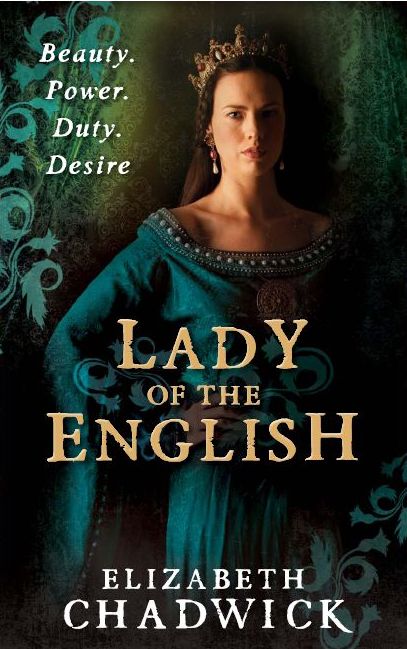
Book Review: Lady of the English

Lady of the English, Elizabeth Chadwick
4 roses

I love Elizabeth Chadwick's novels and was super excited to get her newest for review. While all her novels can be read alone, this novel precedes her phenomenal The Greatest Knight which, while about the early life of William Marshal, also covers the life of Eleanor of Aquitaine and Henry II. Lady of the English is an amazing look into the life of Henry II's formidable mother Matilda, Empress of Germany and heir to the crown of England.

For those not familiar with the history, Henry I (son of William the Conqueror) lost his only son and heir in a ship wreck, leaving his daughter Matilda (one time Empress of Germany) his only heir. When he died Matilda's cousin Stephen usurped the crown thus beginning a horrible period of war and strife in England. I was immediately drawn into Matilda's story - her sadness at loosing her first husband, the frustration of knowing she would be forced into another marriage to suite her father's plans, the anger after realizing the English barons were not going to support her just claim simply because she was a woman. Ms. Chadwick paints a picture of a very strong and passionate woman who is determined to gain her birthright - first for herself and then for her son - and does whatever is necessary. History seems to imply that Matilda was disliked for her pride and arrogance, that she didn't treat the barons with the respect they thought they deserved, and that she wouldn't listen to sound advice when it was given. While you certainly see some pride on Matilda's part in this novel I didn't feel that she was portrayed as overly proud or as having treated anyone in particular in a demeaning way. I found it very interesting to see how her relationship with her husband Geoffrey matured and developed throughout the novel - evolving from nothing but scorn and passion to (grudging) acceptance and the knowledge that they worked well together. I also liked seeing how the two of them raised Henry (future King of England, husband to Eleanor of Aquitaine) to be strong and proud and very well equipped to handle the quagmire of English politics. You will get glimpses of King Stephen and some of his favorites along with tantalizing scenes with John Marshal (father of the wonderful William Marshal and will make you want to read the author's novel about him!). Their characters, I felt, were not as deeply developed as some would like but I had no problem getting a feel for what their personalities were like. Alongside Matilda's story is that of her stepmother Adeliza. I really liked her character. She was quiet and obedient, did what was expected of her as a wife and mother but underneath the quiet was a woman with strength and opinions of her own. Make sure to have a tissue handy towards the end of the novel as Adeliza's story is quite sad. As with all of Ms. Chadwick's novels, she has blended fiction and superb research beautifully, creating a world that is easy for the reader to visualize. Her writing will make the reader feel like they could reach out and touch these people that lived hundreds of years ago; they become that real.

Every historical fiction fan (and even those that aren't fans) should read Ms. Chadwick's novels. They are always exceptionally researched and written and will transport you to a different time period. This novel is a great read and I highly recommend it. This author has other novels about this time period covering many of the different players and all can be read as stand alone novels or can be read in chronological order.

Thursday, July 28, 2011

Book Review: Queen By Right

Queen by Right, Anne Easter Smith
4 roses

I absolutely LOVED this author's novel about Richard III, A Rose for the Crown, and thoroughly enjoyed her novel about Richard's sister Margaret (Daughter of York) and Edward IV's illegitimate daughter Grace (The King's Grace). When I heard Ms. Smith was publishing another novel in her York series I was thrilled and I couldn't wait to get my hands on it! I was not disappointed.

This novel steps back in time (before the events of her other three novels) and tells the fascinating story of Cecily Neville, wife to Richard, Duke of York, and mother to Edward IV and Richard III. Readers familiar with Edward and Richard's stories know who their mother is but she usually only appears for a brief time in most novels. Her tale begins as the Duchess, mourning the death of her husband, looks back on her life, starting with when she was only nine and first met Richard Plantagenet. Through her reflections we see not only how she manages to make her way through this incredibly turbulent time in English history but also the true and deep love she and Richard shared throughout their lives. I really enjoyed Cecily's character and felt drawn into her story. As a child she was outspoken and headstrong, two traits she never really grew out of but was able to control in later years. As a woman she was beautiful and proud but much loved for her kindness. I enjoyed how the author showed the many trying events and people that caused Cecily to become very pious later in her life (having just had a baby myself my heart ached for Cecily when she lost her first children). It was fascinating to watch not only Cecily's character develop and grow because of what she was dealing with but her husband Richard's as well. Theirs was a unique relationship in a time when men generally did not discuss business or politics with their wives. Richard not only discussed issues with Cecily but (sometimes) listened to her advice. Richard, Duke of York, was another character that I genuinely enjoyed learning about since, as with Cecily, his character and personality is usually not developed in novels covering this time period as most authors prefer to focus on their sons. Beyond the wonderful character development, Ms. Smith has created a very realistic and believable medieval world for the reader. There is not an abundance of action in this novel but I did not expect much considering it is based on the life of a woman; much of the information comes from word of mouth or letters. This does not detract from the story in my opinion and I had no problem with the way the novel was laid out.

I have no problems recommending this novel to any reader. Yorkists will enjoy this look into the life of the family matriarch and those just beginning to delve into this very chaotic time period will not find themselves overwhelmed with the story. Queen by Right is intended to be the first of the author's York series but it certainly can be read as a stand alone novel. Bravo to Anne Easter Smith for another beautiful and fantastic look at the York family.

Monday, July 25, 2011

Mailbox Monday - July 25, 2011

Mailbox Monday is a weekly meme originally created by Marcia at A Girl and Her Books (formerly known as The Printed Page) and is now located here. It is the gathering place for readers to share the books that came into their house last week. Warning: Mailbox Monday can lead to envy, toppling TBR piles and humongous wish lists.

Mailbox Monday is being hosted this month by A Sea of Books.

I got a couple that I can't wait to read; gotta get through a couple of others and post reviews first.

The King's Grey Mare, Rosemary Hawley Jarman

Ms. Jarman's novels have come highly recommended so I'm looking forward to getting into this novel about Elizabeth Woodville, Edward IV's wife. This came from Paperbackswap.com.


We Speak No Treason: The White Rose Turned to Blood, R. H. Jarman

Another Jarman novel from Paperbackswap.com. Unfortunately I do not have the first in this series so I am going to have to wait to read this one!

Thursday, June 23, 2011

Book Review: The Virgin Widow

The Virgin Widow, Anne O'Brien
3.5 roses

Being the die hard Ricardian that I am, this book about his wife Anne Neville caught my eye and I had to see how this author treated my favorite historical male. While there are almost an unending supply of novels focusing on the Wars of the Roses and Richard III, I know of only one that focuses on Anne and her life (Plaidy's The Reluctant Queen). Ms. O'Brien's novel focuses on Anne's early years and her relationships with the various (and major) players in the Wars of the Roses. I was not disappointed but I wasn't blown away by any stretch.

I am not going to rehash the ins and outs of the Wars of the Roses here (if anyone wants to know there is endless information available on the internet). The narrator of the novel is Anne Neville, a figure well known to readers of historical fiction: daughter of the Earl of Warwick (the Kingmaker), widow of Edward of Lancaster, and wife of Richard, Duke of Gloucester (Richard III). However, that is pretty much all that is known about the daughter of the most powerful Earl in England and one time Queen of England. We follow her through her youth at Middleham where she meets Richard, her father's quarrels with Edward IV, their exile to France and her disastrous marriage to Edward of Lancaster (son of Henry VI and Margaret of Anjou), the drama surrounding the issue of her inheritance, and her marriage to Richard. Ms. O'Brien has attempted to "fill in the gaps" and has created a voice for Anne which I did not find too unbelievable. Whereas in many novels about Richard, Anne comes across rather quiet, sickly, and insignificant, Ms. O'Brien's Anne is feisty, opinionated, and passionate; this Anne has a backbone which most other interpretations lack. Women during this time period are usually seen as being quite passive with little to no say so in what happens to them and while O'Brien's Anne is well aware that she has no choice and must do as she is told, she certainly has a strong opinion on what is happening to her and to those around her. I found this look at Anne rather interesting. I have to admit that my heart went out to her during the marriage to Edward of Lancaster as she endured all the humiliation heaped upon her. All that being said I did find the fact that she usually called her mother and father "the Earl" or "the Countess" a bit puzzling and her constant instance that Richard needed to declare his true feelings for her got annoying.

The author's treatment of other characters is pretty much in line with what you would expect in a novel about the time period. I did like her Richard as he was, without a doubt, Anne's "knight in shining armor" but he certainly had his flaws and ambitions. While I don't mind a "saintly" Richard, it is much easier to believe that he was a good man, with imperfections of course, and merely doing what needed to be done to survive in a very violent and ruthless time period. I am (obviously) not a fan of Margaret of Anjou or her son but the strange twist the author threw in concerning these two characters really seemed odd and just doesn't fit with history. George, Duke of Clarance, and Anne's sister Isabel, really come across as villains in the story and their behavior throughout the novel made my skin crawl. We don't see that much of Edward IV or Elizabeth Woodville and the personalities of Anne's parents aren't illuminated in much detail either (though the Earl certainly comes across as extremely ambitious).

As for the writing itself, some will not like the fact that it is told completely from Anne's point of view, restricting the author in what she could tell in the story. While I am not a huge fan of historical fiction being told in the first person (because it is so restrictive) I didn't really have a problem with it here, though that could be because I am already very familiar with the history of the period and didn't need to be told what all was happening. As in any historical fiction novel, the author has taken some liberties with known history but there wasn't really anything that made me cringe (the Margaret of Anjou/Edward of Lancaster twist the exception) or that ruined the novel for me. The narrative stops at the birth of Richard and Anne's son so a reader expecting to see Anne's thoughts on Richard's governance of the North and the drama of his reign will be disappointed (though the way it was left leaves it open for the author to continue their story in another novel). This is not a very deep novel and does not bring anything new to the table in regards to information about Anne Neville. It probably could be considered a bit more of a "historical romance" than a "historical fiction" as the main emphasis seems to be Anne and Richard's relationship.

This certainly is not a bad novel and I can easily recommend it to those unfamiliar with the Wars of the Roses and Richard III's story. It is very easy to read and you won't get bogged down in tons of details. Readers who want something more in depth will most likely be a bit disappointed. I still consider Sharon Kay Penman's The Sunne in Splendour as THE book on Richard.

Monday, June 13, 2011

Mailbox Monday

Mailbox Monday is a weekly meme created by Marcia at The Printed Page. It is the gathering place for readers to share the books that came into their house last week. Warning: Mailbox Monday can lead to envy, toppling TBR piles and humongous wish lists.

Mailbox Monday is being hosted this month by The Bluestocking Guide.

I haven't posted one of these in a while but I've been super busy lately (having a baby will do that!). Nevertheless, here is the one that showed up on my doorstep this afternoon!

Lady of the English, Elizabeth Chadwick

I was so stoked when I opened the package left on my doorstep to find EC's latest novel, due out in September! This is part of a familiar story that is rarely mentioned in historical fiction - the tale of Empress Matilda, heir to the English throne and mother of the future Henry II. Can't wait to dive into this one!!


Thank you Sourcebooks for the review copy.

Saturday, November 27, 2010

This Week in History...

November 20, 1591 - Christopher Hatton, a favorite of Elizabeth I, died at Ely Palace, penniless and childless.

1947 - The future Elizabeth II and Philip of Greece married at Westminster Abbey.

November 21, 1272 - Edward I is crowned King of England. He had been on his way home from crusade when his father, Henry III, died.

1620 - The colonists sign the Mayflower Compact.

November 22, 1428 - Richard Neville, Earl of Warwick, is born. Warwick would become known as the "Kingmaker" for his role in helping Edward IV gain the English throne.

1515 – Marie of Guise, wife of James V of Scotland and mother to Mary, Queen of Scots, was born.

November 23, 1499 - Henry VII hanged Perkin Warbeck, who claimed to be the younger of the Princes in the Tower, Richard, Duke of York, at the Tower of London.

1503 – Margaret of York, wife of Charles I, Duke of Burgundy and sister to Edward IV and Richard III, died in Burgundy.

November 24, 1273 - Alfonso, Earl of Chester, son of Edward I, was born in France. At the time, he was his father's only surviving son.

1541 - Margaret Tudor, daughter of Henry VII, sister of Henry VIII, and wife to James IV of Scotland, died of a stroke in Scotland.

1859 - Darwin publishes his On the Origin of the Species.

November 25, 1120 - William the Aetheling, Duke of Normandy, son and heir of Henry I, died when the White Ship sunk off the coast of Normandy. This death resulted in the succession crisis between his sister Matilda and their cousin Stephen.

November 26, 1326 - Hugh le Despenser (the Younger) was tried and executed for treason by Queen Isabella (wife of Edward II, mother of Edward III) and her lover Roger Mortimer.

1504 - Isabella I of Castile, wife of Ferdinand of Aragon and mother of Catherine of Aragon, died in Spain.

Friday, November 19, 2010

This Week in History...

November 13, 1002 - English King Æthelred (the Unready) ordered the killing of all the Danes in England.

November 13, 1312 - Edward III is born at Windsor.

November 14, 1060 – Geoffrey II, Count of Anjou, died.

November 14, 1501 - Arthur, Prince of Wales, son of Henry VII, and Katherine of Aragon were married at St. Paul's Cathedral.

November 14, 1948 - Prince Charles, son of Queen Elizabeth II, was born at Buckingham Palace.

November 15, 1515 - Thomas Wolsey is invested as a Cardinal.

November 16, 1272 - Henry III died at the Palace of Westminster.

November 16, 2010 - Prince William, son of the Prince of Wales, announces he is going to marry his longtime girl friend.

November 17, 1326 - Edmund FitzAlan, Earl of Arundel, is executed by Queen Isabella and her lover, Roger Mortimer, after their invasion of England and the capture of Edward II.

November 17, 1534 - Parliament passes the Act of Supremacy which make Henry VIII the Supreme Head of the Church of England.

November 17, 1558 - Mary I died at St. James Palace. Her half sister Elizabeth became Queen.

November 17, 1558 - Reginald Pole, the last Catholic Archbishop of Canterbury, died from an illness only a few hours after his Queen.

November 17, 1796 - Catherine the Great of Russia died in St. Petersburg.

November 18, 1590 - George Talbot, Earl of Shrewsbury, died at home. He is probably best known as Mary, Queen of Scots' long time jailer. She was in his custody for eighteen years.

November 19, 1600 - The future Charles I was born at Dunfermline Palace in Scotland. His father would become King of England in 3 years.

November 19, 1620 - The Mayflower arrived at Cape Cod.

November 19, 1703 - The Man in the Iron Mask, a mysterious French prisoner, dies.

Friday, November 12, 2010

This Week in History...

November 6, 1429 - Henry VI was crowned King of England seven years after acceding to the throne when he was only eight months old. He was crowned King of France two years later.

November 6, 1479 – Juana of Castile was born to Ferdinand and Isabella. She was Katherine of Aragon's older sister and gained a reputation for being "mad" later in life.

November 7, 1485 - Henry VII's succession is confirmed when Parliament passes an Act of Succession.

November 8, 2003 - The author of this blog got married!

November 9, 1384 – Isabella of Valois, second wife of Richard II, was born in France.

November 9, 1841 - The future Edward VII, eldest son of Queen Victoria and Prince Albert, was born.

November 10, 1480 - Bridget of York, daughter of Edward IV, was born. Bridget would eventually become a nun.

November 10, 1483 - Martin Luther was born.

November 11, 1100 - Henry I married Matilda of Scotland at Westminster Abbey.

November 11, 1620 - The Mayflower Compact is signed near Cape Cod.

November 12, 1035 - Canute, King of England, Denmark and Norway died.

November 12, 1094 – Duncan II of Scotland died.

Friday, November 5, 2010

This Week in History...

October 30, 1460 - Henry VI is again King of England after the Earl of Warwick defeats the Yorkists. He wouldn't remain king for more than a few months.

October 30, 1485 - Henry VII is officially crowned King of England.

October 30, 1938 - Orson Welles's radio broadcast of H.G. Wells's "The War of the Worlds" causing panic in the US. Many thought the broadcast was real.

October 30, 1944 - Anne Frank and her sister Margot are transported from Auschwitz to the Bergen-Belsen concentration camp.

October 31, 1795 - English romantic poet John Keats was born.

November 1, 1396 - Richard II and Isabella of France married in France.

November 1, 1604 - Shakespeare's Othello is presented for the first time at Whitehall.

November 1, 1611 - Shakespeare's The Tempest is presented for the first time at Whitehall.

November 1, 1765 - The British government enacts the Stamp Act.

November 1, 1894 - Nicholas II becomes the new (and last) Czar of Russia upon the death of his father Alexander III.

November 2, 1083 – Matilda of Flanders, wife of William the Conqueror, died in Normandy.

November 2, 1160 – Henry the Young King, son of Henry II and Eleanor of Aquitaine, and Marguerite of France, daughter of King Louis VII, were married in Normandy.

November 2, 1483 – Henry Stafford, 2nd Duke of Buckingham, is executed for treason by Richard III.

November 3, 1783 - Highwayman John Austin is the last person to be publicly hanged at Tyburn in London.

November 4, 1470 - Edward V, son of Edward IV and Elizabeth Woodville, is born in sanctuary at Westminster Abbey.

November 5, 1605 - Guy Fawkes was arrested when his plan to blow up Parliament and James I was discovered.

Friday, October 29, 2010

This Week in History...

October 24, 1537 - Jane Seymour, Henry VIII's third wife, died from complications from childbirth at Hampton Court Palace. She is buried in St. George's Chapel.

October 25, 1154 - England's King Stephen died at Dover Castle. Henry II, son of the Empress Matilda, became the first of the Angevin kings.

October 25, 1400 - Geoffrey Chaucer, famous for his Canterbury Tales, died.

October 25, 1415 - Henry V's English army defeated a vastly superior French army at the Battle of Agincourt.

October 26, 899 - Alfred the Great is believed to have died on this day. He was a Saxon King of Wessex (south west England).

October 26, 1760 - George III was crowned. His is one of the longest reigns in history (60 years).

October 26, 1989 - The Globe Theatre reopened for the first time in 350 years.

October 27, 1401 – Catherine of Valois, future wife of Henry V, was born.

October 28, 1216 - Henry III was crowned King of England.

October 29, 1618 - Sir Walter Raleigh, English seafarer, courtier, writer and once a favorite of Elizabeth I was beheaded at Whitehall. Having been falsely accused of treason and sentenced to death under James I, he was released after 13 years to try and find the legendary gold of El Dorado. He failed and returned to an undeserved fate.

Thursday, October 21, 2010

This Day in History...

October 21, 1449 - George, Duke of Clarence, son of Richard, Duke of York and brother of Edward IV and Richard III, was born in Dublin, Ireland.

October 21, 1772 - English poet Samuel Taylor Coleridge was born.

October 21, 1805 - The British fleet defeats the combined French and Spanish fleet at the Battle of Trafalgar. Admiral Nelson was killed in the battle.

Tuesday, October 19, 2010

This Day in History...

October 19. 1216 - King John died of dysentery at Newark Castle in the midst of a rebellion which was the result of his refusal to recognize the Magna Carta signed the previous year.His nine year old son Henry succeeded him as King of England.

October 19, 1745 - Irish author Jonathan Swift, best known for his tale Gulliver's Travels, died in Dublin.

Thursday, October 14, 2010

This Day in History...

October 14, 1066 - Harold, the last Saxon king of England, is defeated and killed by William the Conqueror at the Battle of Hastings.

October 14, 1217 – Isabella of Gloucester, the first wife of King John (their marriage was annulled) died and is buried at Canterbury Cathedral.

October 14, 1586 - Mary, Queen of Scots goes on trial for her part in the plot against Elizabeth I.

Wednesday, October 13, 2010

This Day in History...

October 13, 54 - Nero becomes the Emperor of Rome.

October 13, 1362 - For the first time, Parliament is opened with a speech in English.

October 13, 1399 - The House of Lancaster was begun when Henry IV was crowned King of England.

October 13, 1453 - Edward, Prince of Wales, son of Henry VI, was born at Westminster Palace.

October 13, 1884 - Greenwich is established as the Universal Time Meridian of longitude.