I hope everyone out there had a wonderful and blessed Christmas this year! We got SNOW here in Georgia! That's big news since we haven't had a white Christmas since 1882!!
Hope everyone has a fun and safe New Year!
Sunday, December 26, 2010

Thursday, December 23, 2010
Historical Fiction Challenge 2011
This wonderful challenge is being hosted in 2011 by Historical Tapestry. I finished the challenge this year by May I believe so I don't think I'll have too much trouble finishing it next year (though I will have a baby arriving in May!).
There are, as usual, different levels you can join at and I am, again, going for the biggest (I do love to read even though its been difficult lately!). I am going to join up at the Severe Bookaholism level which means I'll need to read 20 book from January to December. Easy. :)
Head on over to their blog to check it out and join up if interested!

There are, as usual, different levels you can join at and I am, again, going for the biggest (I do love to read even though its been difficult lately!). I am going to join up at the Severe Bookaholism level which means I'll need to read 20 book from January to December. Easy. :)
Head on over to their blog to check it out and join up if interested!
Tuesday, December 21, 2010
Author Guest Post: Stephanie Dray
I was privileged to receive an advance copy of Stephanie Dray's new novel Lily of the Nile for review and Ms. Dray wrote a guest post for my blog to discuss the main character of her novel, Cleopatra Selene, Cleopatra's daughter.
How Cleopatra Selene Saved Isis
by Stephanie Dray
The heroine of my forthcoming debut novel,Lily of the Nile, is Cleopatra Selene, daughter of the much more famous Cleopatra VII of Egypt. Only ten years old when her parents committed suicide, Selene was taken prisoner by the Romans and marched through the streets in chains. Her life was spared, however, and Augustus, Rome’s first emperor [1], took her into his household, where she had to curry favor to survive.
How Cleopatra Selene Saved Isis
by Stephanie Dray
The heroine of my forthcoming debut novel,Lily of the Nile, is Cleopatra Selene, daughter of the much more famous Cleopatra VII of Egypt. Only ten years old when her parents committed suicide, Selene was taken prisoner by the Romans and marched through the streets in chains. Her life was spared, however, and Augustus, Rome’s first emperor [1], took her into his household, where she had to curry favor to survive.
Like her mother before her, Selene was a worshipper of Isis, the all-powerful sorceress and mother-goddess of the Nile. Unlike her mother, however, Selene practiced her faith in a time during which it was politically disadvantageous, and perhaps dangerous, for her to do so.
Generally speaking, the Romans employed a liberal philosophy when it came to religion. If a conquered nation submitted to Roman civil authority, they were free to worship their native gods. There were notable exceptions to this policy, however. The early Roman hostility towards Christianity is well-documented. Druids were persecuted and effectively wiped out. During the Augustan Age, Rome was also particularly antagonistic to the worshippers of Isis.
Augustus had a special enmity for the Isiac faith, no doubt owing to the fact that Isis was the patron deity of his arch rival, Cleopatra. Like the Ptolemaic queens before her, Cleopatra embraced Isis, presenting herself as a veritable living incarnation of the powerful mother-goddess. The worship of Isis often eclipsed that of her husband Osiris and her son Horus, such that she made a perfect symbol for queens seeking to rule on their own. Cleopatra knew this and made great political use of the Isiac priesthood to further her political aims.
By the time Rome declared war upon Cleopatra, Isis worship had spread throughout the Mediterranean world, so Cleopatra’s religious influence was a genuine threat. However, Augustus remained hostile towards Isiacism even after Cleopatra’s death [2]
This was almost certainly because the Isiac temples promoted values antithetical to the “back to family values” political campaign that Augustus was waging to consolidate his power base. In short, Isiacism wasn’t simply the worship of some foreign goddess, nor even simply posthumous support for his conquered enemy, but the promotion of a set of political and religious philosophies that Augustus did not want to spread.
For the Romans, religion was typically public business. Roman temples were generally open and visible to the street, and their private chambers were generally limited to an inner sanctum for the cult statue. By contrast, Isiac temples typically fostered a more intimate atmosphere by enclosing the temple by walls so as to preserve the privacy of the worshippers. This sense of privacy was greeted with mistrust by some Romans who considered Isiac temples a hotbed of conspiracy where the disaffected could gather and secretly plot against the state.
Perhaps they were not entirely wrong. Isiac temples admitted freedmen, women, and even slaves to their community, not just to foster a more personal relationship with the goddess, but also to help promote the cause of social justice. That Isis was a goddess of mercy who allegedly frowned upon slavery and other social ills may not have been half as dangerous as the notion that a great goddess like Isis might take the part of a lowly slave over the cause of his master. Or that she might take interest in a slave at all. After all, this was still an age of orthopraxy versus orthodoxy, where the emphasis was upon correct ritual toward the gods rather than any intense personal relationship with the realm of the divine. As a forerunner of Christianity, Isiacism was starting to change the very idea of religion.
Moreover, during the Augustan Age, Isis worship promoted a more egalitarian relationship between the sexes and admitted both men and women into the priesthood. While there is evidence that Isiacism promoted chastity and periods of abstinence, Isis was a great favorite amongst prostitutes and was also associated with sexual license and mysterious fertility rites.
All this ran counter to Augustus’ policy of preserving the social hierarchy and his place as the religious leader of the state. At a time when he was regulating sex, marriage, and the role of women [3] to conform with traditional values--or what he imagined those traditional values to be--Isiacism was an obstacle. That it was a popular religion made it only worse; he closed Isiac temples, forbade the worship of Isis within the old sacred boundary of Rome, and eventually sent his second-in-command, Agrippa, to put down an Isiac rebellion of some sort [4] and prohibit the worship of Isis in Rome and her surrounds.
That this assault on Isis worship happened during Selene’s lifetime--much of it while she was actually living in Rome--is nothing short of astonishing when we recall that she was, like her mother, an important figure to Isiacs. For her mother’s partisans, she represented a chance to return to power and for Isis worship to flourish where Augustus tried to stamp it out. As Cleopatra’s daughter, a surviving Ptolemy, and an heir to that dynasty, Selene was also, undoubtedly, the faith’s most prominent adherent.
Under the circumstances, especially considering that her survival depended upon Augustus’ good will, one might have expected Selene to renounce her patron’s least favorite goddess. But if the numismatic evidence of her reign is any indication, Selene never wavered in her faith. This little captive princess eventually became Queen of Mauretania where she explicitly adopted Isis as her goddess. Selene’s coins--the currency of her realm, all but guaranteed to be seen by Augustus himself--repeatedly would display Isis symbols. Moreover, Selene and her husband Juba II would go on to establish in Mauretania a giant temple of Isis where sacred crocodiles were kept.
As the most prominent client queen of the Augustan Age, Selene’s actions would have made her an influential religious dissident. Whether she paid a political price for this is unknown, but if Augustus ever considered returning her to the throne of Egypt, this may have tipped the scales against the idea. With apparent determination, Selene expanded the reach of Isiacism into Western Africa [5] and created a safe-haven for Isis worshippers at a time when their cult was imperiled. What’s more, Selene’s spiritual influence may have reached into Augustus’ own household.
Though Augustus’ successor, Tiberius, was also hostile toward the Isiacs to the point of crucifying some of them, the other emperors of the Julio-Claudian dynasty gave Isis an elevated status in the Roman world that would last for hundreds of years. Claudius, Nero, and Caligula all descended from Selene’s half sisters, the Antonias, leading one to speculate whether or not these women were receptive to Selene’s religious ideas and passed them on to their sons. Moreover, Selene’s beliefs may have influenced Augustus’ daughter, Julia, whose villa featured a painting of flamboyant priestesses of Isis wearing high headdresses and shaking rattles. One can only speculate what her father may have thought of that.
It is possible that the persecution of Isiacs only made her worshippers stronger in their faith and that the religion would have grown even without Selene’s active participation. However, the Queen of Mauretania’s unambiguous support of Isiacism must have encouraged worshippers throughout the Mediterranean and may well have protected the faith during the Augustan Age so that it could later flourish. This is especially relevant since Isis is a living faith even today and Cleopatra Selene is one of its unsung heroines.
[1] Some might argue that Augustus was not Rome’s first emperor, but given the outcome of his climb to power ended the Roman Republic, I always refer to him as such.
[2] In spite of this hostility, he appears to have allowed himself to be portrayed in reverence to Isis in carvings throughout Egypt. Historian Diana E. E. Kleiner suggests that this is because the power of Isis iconography was so influential in Egypt that it was easier for Augustus to portray himself as Cleopatra’s successor in Egypt than her conqueror. In the rest of the empire, the political situation differed, and Augustus marked the Isiacs as his enemies accordingly.
[3] One of the ironies of the Augustan Age is that while Rome’s first emperor apparently held deeply misogynistic ideas that would be used to oppress women for the next two thousand years, his wife Livia was one of the most powerful women in history.
[4] Why Agrippa needed to restore order by suppressing the Isiacs isn’t well understood. Whether Isiacs were protesting their treatment or involving themselves in intrigues against the state isn’t known, but it is significant to note that this occurred in 22 B.C. following a period of famine and food riots. Perhaps the Isiacs were agitating for charity. Or perhaps they had involved themselves in the Murena-Caepio conspiracies surrounding Augustus’ new regime. They may even have been angry or emboldened by the invasion of Egypt that year by the Kandake of Meroe.
[5] While the worship of Isis was not unknown in the amorphous area then known as “Libya,” the dominant goddess was Carthaginian Tanit. That Selene clung to Egyptian Isis even while trying to win over her new Mauretanian subjects is a testament both to her faith and her intention to re-found her mother’s dynasty.
I would like to thank Stephanie Dray for this extremely interesting post about a little known, but fascinating, figure in history. I hope everyone will look for my review of her debut novel, which should be posted tomorrow.
Apologies!!
Hello all!
I know I have been absent from my blog for stretches here lately and I want to apologize for that. There have been many things I've wanted to post but have not been able to sit at my computer.
From about September to November I was dealing with the exhaustion and quesiness of a difficult pregnancy (they say each is different and I didn't have a moment's problem with the first one!) and finally shook off that ick around Thanksgiving. Since then I have been in bed almost the entire month of December with either upper respiratory infections, sinus infections, or horrible colds. Needless to say it has really interfered with my computer time (and has made this Christmas not so fun).
I promise I have NOT forgotten you and I do have some wonderful reviews up coming (Susan Higginbotham's new novel Queen of Last Hopes is one!).
I know I have been absent from my blog for stretches here lately and I want to apologize for that. There have been many things I've wanted to post but have not been able to sit at my computer.
From about September to November I was dealing with the exhaustion and quesiness of a difficult pregnancy (they say each is different and I didn't have a moment's problem with the first one!) and finally shook off that ick around Thanksgiving. Since then I have been in bed almost the entire month of December with either upper respiratory infections, sinus infections, or horrible colds. Needless to say it has really interfered with my computer time (and has made this Christmas not so fun).
I promise I have NOT forgotten you and I do have some wonderful reviews up coming (Susan Higginbotham's new novel Queen of Last Hopes is one!).
Saturday, November 27, 2010
This Week in History...
November 20, 1591 - Christopher Hatton, a favorite of Elizabeth I, died at Ely Palace, penniless and childless.
1947 - The future Elizabeth II and Philip of Greece married at Westminster Abbey.
November 21, 1272 - Edward I is crowned King of England. He had been on his way home from crusade when his father, Henry III, died.
1620 - The colonists sign the Mayflower Compact.
November 22, 1428 - Richard Neville, Earl of Warwick, is born. Warwick would become known as the "Kingmaker" for his role in helping Edward IV gain the English throne.
1515 – Marie of Guise, wife of James V of Scotland and mother to Mary, Queen of Scots, was born.
November 23, 1499 - Henry VII hanged Perkin Warbeck, who claimed to be the younger of the Princes in the Tower, Richard, Duke of York, at the Tower of London.
1503 – Margaret of York, wife of Charles I, Duke of Burgundy and sister to Edward IV and Richard III, died in Burgundy.
November 24, 1273 - Alfonso, Earl of Chester, son of Edward I, was born in France. At the time, he was his father's only surviving son.
1541 - Margaret Tudor, daughter of Henry VII, sister of Henry VIII, and wife to James IV of Scotland, died of a stroke in Scotland.
1859 - Darwin publishes his On the Origin of the Species.
November 25, 1120 - William the Aetheling, Duke of Normandy, son and heir of Henry I, died when the White Ship sunk off the coast of Normandy. This death resulted in the succession crisis between his sister Matilda and their cousin Stephen.
November 26, 1326 - Hugh le Despenser (the Younger) was tried and executed for treason by Queen Isabella (wife of Edward II, mother of Edward III) and her lover Roger Mortimer.
1504 - Isabella I of Castile, wife of Ferdinand of Aragon and mother of Catherine of Aragon, died in Spain.
1947 - The future Elizabeth II and Philip of Greece married at Westminster Abbey.
November 21, 1272 - Edward I is crowned King of England. He had been on his way home from crusade when his father, Henry III, died.
1620 - The colonists sign the Mayflower Compact.
November 22, 1428 - Richard Neville, Earl of Warwick, is born. Warwick would become known as the "Kingmaker" for his role in helping Edward IV gain the English throne.
1515 – Marie of Guise, wife of James V of Scotland and mother to Mary, Queen of Scots, was born.
November 23, 1499 - Henry VII hanged Perkin Warbeck, who claimed to be the younger of the Princes in the Tower, Richard, Duke of York, at the Tower of London.
1503 – Margaret of York, wife of Charles I, Duke of Burgundy and sister to Edward IV and Richard III, died in Burgundy.
November 24, 1273 - Alfonso, Earl of Chester, son of Edward I, was born in France. At the time, he was his father's only surviving son.
1541 - Margaret Tudor, daughter of Henry VII, sister of Henry VIII, and wife to James IV of Scotland, died of a stroke in Scotland.
1859 - Darwin publishes his On the Origin of the Species.
November 25, 1120 - William the Aetheling, Duke of Normandy, son and heir of Henry I, died when the White Ship sunk off the coast of Normandy. This death resulted in the succession crisis between his sister Matilda and their cousin Stephen.
November 26, 1326 - Hugh le Despenser (the Younger) was tried and executed for treason by Queen Isabella (wife of Edward II, mother of Edward III) and her lover Roger Mortimer.
1504 - Isabella I of Castile, wife of Ferdinand of Aragon and mother of Catherine of Aragon, died in Spain.
Tuesday, November 23, 2010
A Tale of Two Emmas
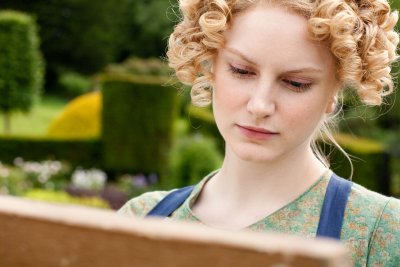
 I have fallen in love with Jane Austen's novel Emma and ever since reading it I have watched two versions of the story: the 1996 Miramax movie starring Gwyneth Paltrow as Emma and Jeremy Northam (sigh) as Mr. Knightley and the 2009 TV mini-series starring Romola Garai as Emma and Johnny Lee Miller as Mr. Knightley. Both had their good points and both are a joy to watch but I have to say that my favorite is probably the 1996 version (mostly likely because of Northam's presence!). That being said, both movies had things I really liked, making it difficult to say for certain which was the better movie. Here is a run down...
Emma - The title character is played in the 96 version by Gwyneth Paltrow and by Romola
 Garai in the 09 mini-series. I can't say that I feel either of them are the "perfect" Emma Woodhouse. While Paltrow had the easy grace and dignity I would have
  expected from a lady of Emma's situation, I found myself liking Garai's personality a bit more. Paltrow just came across as a bit too haughty for the part and I have never felt Emma was haughty. Neither really "looked" like I have always pictured Emma, either; Garai didn't seem quite good looking enough and Paltrow seemed a bit too ... ethereal. Though in the end I think I'd pick Paltrow's Emma because, on occasion, Garai's seemed a bit ... clownish.
Mr. Knightley - I'm sorry but for me there can be no other Knightley except Jeremy Northam.

 Johnny Lee Miller played the role in the 09 series and he did a fine job but for me, Northam IS Knightley. Everything about his performance says "Regency British Gentleman." The manners and behaviors of a 19th century English gentleman come so easily to him that you would think he was born in the time period. Miller's portrayal, while good, seemed a bit too rough and stiff for my taste.
Harriet Smith - This was really a toss up for me. Toni Collette played the part in the 96 movie
 and Louise Dylan had the role in the 09 mini series. I actually liked both of these
  ladies but for different reasons. Dylan's Harriet looked more like the Harriet I envision from Austen's description but I positively LOVE Collette's portrayal of the character. Dylan's portrayal just got on my nerves occasionally and Collette just didn't LOOK like Harriet. If I could mesh the two I think we'd have the perfect Harriet Smith.
Jane Fairfax - Again, this was a bit of a toss up for me but I think in the end I actually prefer

 Polly Walker's Jane in the 96 movie over Laura Pyper's portrayal in the 09 version. To me, Walker had the beauty and grace that Jane is said to have had (over and over and over), though she seems a bit old for the role. Pyper's personality was very sweet and genteel, like I would expect from Jane, but she just didn't have the beauty that Jane was supposed to possess.
Miss. Bates - Hands down I prefer Sophie Thompson's (did you know she's Emma Thompson's s
 ister?) Miss. Bates in the 96 movie over Tamsin Greig's in the 09 series. Thompson's portrayal was spot on in my opinion. She had the sweetness and silliness of the
  character down perfectly. Greig's version did not have the lightness about it and it really left me a bit cold. In fact, in the famous scene where Emma insults her at the Box Hill picnic, my heart aches for Thompson's Miss. Bates while I feel absolutely nothing for Greig's.
Frank Churchill - Chalk one up for the 09 series here! While I like Ewan McGregor, his
 portrayal of Frank in the 96 movie is almost so bad it hurts. I don't know if was just the way the
 part was written but it really was laughable (though there are some scenes that I really loved). And what in the world did they do to his hair?? Rupert Evans did a good job with the part in the series. He looked the part for one and his personality seemed to fit, and while there were a few times when his attitude really annoyed me, he had the charm I'd expect from Frank.
Mrs. Weston - I really can't say which of the two I liked more. Greta Scacchi's version in the 96

 movie really had the "motherly" aspect I see in Mrs. Weston and her age seemed more appropriate, though I do think she may have been a bit too good looking to have been "just a governess." She also had a grace and dignity I would expect from a lady who had been paid to teach a young girl how to be a lady. Jodhi May did a fantastic job and she looked much more like I envisioned Mrs. Weston but to me she seemed a bit too young to have been a governess for seventeen years.
Mr. Elton - I think to pick a favorite here will depend on the type of Mr. Elton you envision. If
 you like a slightly arrogant but slightly comical Mr. Elton, then Alan Cumming's portrayal in the
 96 movie will be to your liking. Cumming did a wonderful job with the role though his version is much more humorous and you can't quite take him seriously sometimes (I LOVE the scene where he sits between Emma and Knightley at the Christmas party). However, if you would prefer Mr. Elton to be oozing arrogance and come across as almost creepy, then Blake Ritson's version in the 09 series is right up your alley. I honestly think I prefer Alan Cumming's Mr. Elton for the main reason that I find Ritson's just too creepy to watch! His arrogance is sickening while Cumming can make you laugh at him.
Mrs. Elton - While both actresses did a fine job with the role, I'm going to have to go with
 Christina Cole's version in the 09 series over Juliet Stevenson's more comical
  portrayal in the 96 movie. While I LOVED Stevenson's comical Mrs. Elton I think Cole's portrayal is much more accurate in her arrogance and bossiness. She does a splendid job as coming across as an overbearing, arrogant, selfish Mrs. Elton, which I always envisioned when I read the novel (I could use a much more colorful adjective to describe how she appears in the movie, which is spot on for Mrs. Elton, but I never know who might be reading my blog!). Cole's Mrs. Elton also has the look and age I would expect.
Scenery - This goes to the 09 series because it just shows so much more. The scenery in the 96 version were beautiful - what little you actually saw - but there is just so much more included in the 09 series. I really loved seeing more of the homes where the different characters lived; Donwell Abbey in the 09 version is exactly what I would have pictured (though I did prefer the Hartfield that is shown in the 96 movie). I think showing more helps a modern audience grasp the times so much better.
Storyline - I believe I have to give this to the 09 series simply because it shows so much
 more of the story than the 96 movie. Yes, I know the 96 movie had to fit the whole story into two hours, and they did a fine job with it, but there was so
  much that was left out that is just fun to read in the novel. The mini-series was able to include so much more of Austen's original story and gave some characters (which had been virtually left out of the 96 movie) new life, namely John and Isabella Knightley. I do have to say that some of the individual lines from the 96 movie were fantastic (Northam's wonderful and powerful "Badly done, Emma! Badly done" for one). I also liked the opening of the series where they show how the three "children" (Emma, Frank, and Jane) came to be in their respective situations.
So there you have it. My run down of the two versions I have seen. Looking at it, it seems that I prefer more of the actors and actresses in the 96 version but I like the actual storyline and scenery from the 09 version. I'd say its pretty much a draw for me, though I do think I like the 96 movie better overall. Both movies had good points and bad points and in the end, each viewer is going to have their own reasons for liking or disliking one or the other.
Friday, November 19, 2010
This Week in History...
November 13, 1002 - English King Æthelred (the Unready) ordered the killing of all the Danes in England.
November 13, 1312 - Edward III is born at Windsor.
November 14, 1060 – Geoffrey II, Count of Anjou, died.
November 14, 1501 - Arthur, Prince of Wales, son of Henry VII, and Katherine of Aragon were married at St. Paul's Cathedral.
November 14, 1948 - Prince Charles, son of Queen Elizabeth II, was born at Buckingham Palace.
November 15, 1515 - Thomas Wolsey is invested as a Cardinal.
November 16, 1272 - Henry III died at the Palace of Westminster.
November 16, 2010 - Prince William, son of the Prince of Wales, announces he is going to marry his longtime girl friend.
November 17, 1326 - Edmund FitzAlan, Earl of Arundel, is executed by Queen Isabella and her lover, Roger Mortimer, after their invasion of England and the capture of Edward II.
November 17, 1534 - Parliament passes the Act of Supremacy which make Henry VIII the Supreme Head of the Church of England.
November 17, 1558 - Mary I died at St. James Palace. Her half sister Elizabeth became Queen.
November 17, 1558 - Reginald Pole, the last Catholic Archbishop of Canterbury, died from an illness only a few hours after his Queen.
November 17, 1796 - Catherine the Great of Russia died in St. Petersburg.
November 18, 1590 - George Talbot, Earl of Shrewsbury, died at home. He is probably best known as Mary, Queen of Scots' long time jailer. She was in his custody for eighteen years.
November 19, 1600 - The future Charles I was born at Dunfermline Palace in Scotland. His father would become King of England in 3 years.
November 19, 1620 - The Mayflower arrived at Cape Cod.
November 19, 1703 - The Man in the Iron Mask, a mysterious French prisoner, dies.
November 13, 1312 - Edward III is born at Windsor.
November 14, 1060 – Geoffrey II, Count of Anjou, died.
November 14, 1501 - Arthur, Prince of Wales, son of Henry VII, and Katherine of Aragon were married at St. Paul's Cathedral.
November 14, 1948 - Prince Charles, son of Queen Elizabeth II, was born at Buckingham Palace.
November 15, 1515 - Thomas Wolsey is invested as a Cardinal.
November 16, 1272 - Henry III died at the Palace of Westminster.
November 16, 2010 - Prince William, son of the Prince of Wales, announces he is going to marry his longtime girl friend.
November 17, 1326 - Edmund FitzAlan, Earl of Arundel, is executed by Queen Isabella and her lover, Roger Mortimer, after their invasion of England and the capture of Edward II.
November 17, 1534 - Parliament passes the Act of Supremacy which make Henry VIII the Supreme Head of the Church of England.
November 17, 1558 - Mary I died at St. James Palace. Her half sister Elizabeth became Queen.
November 17, 1558 - Reginald Pole, the last Catholic Archbishop of Canterbury, died from an illness only a few hours after his Queen.
November 17, 1796 - Catherine the Great of Russia died in St. Petersburg.
November 18, 1590 - George Talbot, Earl of Shrewsbury, died at home. He is probably best known as Mary, Queen of Scots' long time jailer. She was in his custody for eighteen years.
November 19, 1600 - The future Charles I was born at Dunfermline Palace in Scotland. His father would become King of England in 3 years.
November 19, 1620 - The Mayflower arrived at Cape Cod.
November 19, 1703 - The Man in the Iron Mask, a mysterious French prisoner, dies.
Friday, November 12, 2010
This Week in History...
November 6, 1429 - Henry VI was crowned King of England seven years after acceding to the throne when he was only eight months old. He was crowned King of France two years later.
November 6, 1479 – Juana of Castile was born to Ferdinand and Isabella. She was Katherine of Aragon's older sister and gained a reputation for being "mad" later in life.
November 7, 1485 - Henry VII's succession is confirmed when Parliament passes an Act of Succession.
November 8, 2003 - The author of this blog got married!
November 9, 1384 – Isabella of Valois, second wife of Richard II, was born in France.
November 9, 1841 - The future Edward VII, eldest son of Queen Victoria and Prince Albert, was born.
November 10, 1480 - Bridget of York, daughter of Edward IV, was born. Bridget would eventually become a nun.
November 10, 1483 - Martin Luther was born.
November 11, 1100 - Henry I married Matilda of Scotland at Westminster Abbey.
November 11, 1620 - The Mayflower Compact is signed near Cape Cod.
November 12, 1035 - Canute, King of England, Denmark and Norway died.
November 12, 1094 – Duncan II of Scotland died.
November 6, 1479 – Juana of Castile was born to Ferdinand and Isabella. She was Katherine of Aragon's older sister and gained a reputation for being "mad" later in life.
November 7, 1485 - Henry VII's succession is confirmed when Parliament passes an Act of Succession.
November 8, 2003 - The author of this blog got married!
November 9, 1384 – Isabella of Valois, second wife of Richard II, was born in France.
November 9, 1841 - The future Edward VII, eldest son of Queen Victoria and Prince Albert, was born.
November 10, 1480 - Bridget of York, daughter of Edward IV, was born. Bridget would eventually become a nun.
November 10, 1483 - Martin Luther was born.
November 11, 1100 - Henry I married Matilda of Scotland at Westminster Abbey.
November 11, 1620 - The Mayflower Compact is signed near Cape Cod.
November 12, 1035 - Canute, King of England, Denmark and Norway died.
November 12, 1094 – Duncan II of Scotland died.
Friday, November 5, 2010
This Week in History...
October 30, 1460 - Henry VI is again King of England after the Earl of Warwick defeats the Yorkists. He wouldn't remain king for more than a few months.
October 30, 1485 - Henry VII is officially crowned King of England.
October 30, 1938 - Orson Welles's radio broadcast of H.G. Wells's "The War of the Worlds" causing panic in the US. Many thought the broadcast was real.
October 30, 1944 - Anne Frank and her sister Margot are transported from Auschwitz to the Bergen-Belsen concentration camp.
October 31, 1795 - English romantic poet John Keats was born.
November 1, 1396 - Richard II and Isabella of France married in France.
November 1, 1604 - Shakespeare's Othello is presented for the first time at Whitehall.
November 1, 1611 - Shakespeare's The Tempest is presented for the first time at Whitehall.
November 1, 1765 - The British government enacts the Stamp Act.
November 1, 1894 - Nicholas II becomes the new (and last) Czar of Russia upon the death of his father Alexander III.
November 2, 1083 – Matilda of Flanders, wife of William the Conqueror, died in Normandy.
November 2, 1160 – Henry the Young King, son of Henry II and Eleanor of Aquitaine, and Marguerite of France, daughter of King Louis VII, were married in Normandy.
November 2, 1483 – Henry Stafford, 2nd Duke of Buckingham, is executed for treason by Richard III.
November 3, 1783 - Highwayman John Austin is the last person to be publicly hanged at Tyburn in London.
November 4, 1470 - Edward V, son of Edward IV and Elizabeth Woodville, is born in sanctuary at Westminster Abbey.
November 5, 1605 - Guy Fawkes was arrested when his plan to blow up Parliament and James I was discovered.
October 30, 1485 - Henry VII is officially crowned King of England.
October 30, 1938 - Orson Welles's radio broadcast of H.G. Wells's "The War of the Worlds" causing panic in the US. Many thought the broadcast was real.
October 30, 1944 - Anne Frank and her sister Margot are transported from Auschwitz to the Bergen-Belsen concentration camp.
October 31, 1795 - English romantic poet John Keats was born.
November 1, 1396 - Richard II and Isabella of France married in France.
November 1, 1604 - Shakespeare's Othello is presented for the first time at Whitehall.
November 1, 1611 - Shakespeare's The Tempest is presented for the first time at Whitehall.
November 1, 1765 - The British government enacts the Stamp Act.
November 1, 1894 - Nicholas II becomes the new (and last) Czar of Russia upon the death of his father Alexander III.
November 2, 1083 – Matilda of Flanders, wife of William the Conqueror, died in Normandy.
November 2, 1160 – Henry the Young King, son of Henry II and Eleanor of Aquitaine, and Marguerite of France, daughter of King Louis VII, were married in Normandy.
November 2, 1483 – Henry Stafford, 2nd Duke of Buckingham, is executed for treason by Richard III.
November 3, 1783 - Highwayman John Austin is the last person to be publicly hanged at Tyburn in London.
November 4, 1470 - Edward V, son of Edward IV and Elizabeth Woodville, is born in sanctuary at Westminster Abbey.
November 5, 1605 - Guy Fawkes was arrested when his plan to blow up Parliament and James I was discovered.
Friday, October 29, 2010
This Week in History...
October 24, 1537 - Jane Seymour, Henry VIII's third wife, died from complications from childbirth at Hampton Court Palace. She is buried in St. George's Chapel.
October 25, 1154 - England's King Stephen died at Dover Castle. Henry II, son of the Empress Matilda, became the first of the Angevin kings.
October 25, 1400 - Geoffrey Chaucer, famous for his Canterbury Tales, died.
October 25, 1415 - Henry V's English army defeated a vastly superior French army at the Battle of Agincourt.
October 26, 899 - Alfred the Great is believed to have died on this day. He was a Saxon King of Wessex (south west England).
October 26, 1760 - George III was crowned. His is one of the longest reigns in history (60 years).
October 26, 1989 - The Globe Theatre reopened for the first time in 350 years.
October 27, 1401 – Catherine of Valois, future wife of Henry V, was born.
October 28, 1216 - Henry III was crowned King of England.
October 29, 1618 - Sir Walter Raleigh, English seafarer, courtier, writer and once a favorite of Elizabeth I was beheaded at Whitehall. Having been falsely accused of treason and sentenced to death under James I, he was released after 13 years to try and find the legendary gold of El Dorado. He failed and returned to an undeserved fate.
October 25, 1154 - England's King Stephen died at Dover Castle. Henry II, son of the Empress Matilda, became the first of the Angevin kings.
October 25, 1400 - Geoffrey Chaucer, famous for his Canterbury Tales, died.
October 25, 1415 - Henry V's English army defeated a vastly superior French army at the Battle of Agincourt.
October 26, 899 - Alfred the Great is believed to have died on this day. He was a Saxon King of Wessex (south west England).
October 26, 1760 - George III was crowned. His is one of the longest reigns in history (60 years).
October 26, 1989 - The Globe Theatre reopened for the first time in 350 years.
October 27, 1401 – Catherine of Valois, future wife of Henry V, was born.
October 28, 1216 - Henry III was crowned King of England.
October 29, 1618 - Sir Walter Raleigh, English seafarer, courtier, writer and once a favorite of Elizabeth I was beheaded at Whitehall. Having been falsely accused of treason and sentenced to death under James I, he was released after 13 years to try and find the legendary gold of El Dorado. He failed and returned to an undeserved fate.
Thursday, October 28, 2010
Recent Search Terms!
I know I'm horribly behind in posting but things are really crazy at home these days. Here are some of the recent search terms used to find my blog...some of them have me scratching my head!
gwyn's cancer fight
Wow...I guess I should have taken that call from the doc...
reading books
No, I really don't. I just like the way they look lined up on my bookshelf.
johnny kingdom talking about lady who died
Oh yes, THAT lady.
find a mistress in kalispell, montana
What? I don't know whether to laugh or be worried that this searcher was directed to my site...
Roger Bigod time of singing virgin?
I don't think he'd appreciate it if we asked.
Susan Kay Penman scottish history
I must have missed this book?
gwyn's cancer fight
Wow...I guess I should have taken that call from the doc...
reading books
No, I really don't. I just like the way they look lined up on my bookshelf.
johnny kingdom talking about lady who died
Oh yes, THAT lady.
find a mistress in kalispell, montana
What? I don't know whether to laugh or be worried that this searcher was directed to my site...
Roger Bigod time of singing virgin?
I don't think he'd appreciate it if we asked.
Susan Kay Penman scottish history
I must have missed this book?
Friday, October 22, 2010
This Day in History...
October 22, 1071 - William IX, Duke of Aquitaine and Eleanor of Aquitaine's grandfather, was born.
He is sometimes considered to be the first troubadour.
October 22, 1734 - Famous American pioneer Daniel Boone was born.
* TDIH is going to become This Week in History starting next week. There are so many things going on in my life at the moment that I have a hard time getting to the computer each day. I haven't decided if I'll post at the beginning of the week or at the end so keep an eye out! *
He is sometimes considered to be the first troubadour.
October 22, 1734 - Famous American pioneer Daniel Boone was born.
* TDIH is going to become This Week in History starting next week. There are so many things going on in my life at the moment that I have a hard time getting to the computer each day. I haven't decided if I'll post at the beginning of the week or at the end so keep an eye out! *
Thursday, October 21, 2010
This Day in History...
October 21, 1449 - George, Duke of Clarence, son of Richard, Duke of York and brother of Edward IV and Richard III, was born in Dublin, Ireland.
October 21, 1772 - English poet Samuel Taylor Coleridge was born.
October 21, 1805 - The British fleet defeats the combined French and Spanish fleet at the Battle of Trafalgar. Admiral Nelson was killed in the battle.
October 21, 1772 - English poet Samuel Taylor Coleridge was born.
October 21, 1805 - The British fleet defeats the combined French and Spanish fleet at the Battle of Trafalgar. Admiral Nelson was killed in the battle.
Wednesday, October 20, 2010
This Day in History...
October 20, 1632 - English architect Christopher Wren is born. He was responsible for rebuilding St. Paul's Cathedral after the Great Fire of London.
October 20, 1714 - George I is crowned King of England.
October 20, 1803 - The US government ratified the Louisiana Purchase, doubling the size of the country.
October 20, 1910 - The hull of the RMS Olympic (sister ship to the Titanic) was launched at the shipyard in Belfast, Ireland.
October 20, 1714 - George I is crowned King of England.
October 20, 1803 - The US government ratified the Louisiana Purchase, doubling the size of the country.
October 20, 1910 - The hull of the RMS Olympic (sister ship to the Titanic) was launched at the shipyard in Belfast, Ireland.
Tuesday, October 19, 2010
This Day in History...
October 19. 1216 - King John died of dysentery at Newark Castle in the midst of a rebellion which was the result of his refusal to recognize the Magna Carta signed the previous year.His nine year old son Henry succeeded him as King of England.
October 19, 1745 - Irish author Jonathan Swift, best known for his tale Gulliver's Travels, died in Dublin.
October 19, 1745 - Irish author Jonathan Swift, best known for his tale Gulliver's Travels, died in Dublin.
Monday, October 18, 2010
This Day in History...
October 18, 1469 - Ferdinand II of Aragon married Isabella I of Castile.
October 18, 1541 - Margaret Tudor, daughter of Henry VII, wife of James IV of Scotland, and sister of Henry VIII, died in Scotland.
October 18, 1851 - Herman Melville's novel Moby Dick is first published (under the name The Whale) in London.
October 18, 1541 - Margaret Tudor, daughter of Henry VII, wife of James IV of Scotland, and sister of Henry VIII, died in Scotland.
October 18, 1851 - Herman Melville's novel Moby Dick is first published (under the name The Whale) in London.
Friday, October 15, 2010
This Day in History...
October 15, 1582 - After the Pope implemented the Gregorian calendar, this day followed October 4 in Europe.
October 15, 1793 - Marie-Antoinette is tried and condemned to death in a swift, pre-determined trial.
October 15, 1815 - Napoleon begins his exile on Saint Helena.
October 15, 1959 - Sarah Ferguson, one time Duchess of York, was born in London.
October 15, 1793 - Marie-Antoinette is tried and condemned to death in a swift, pre-determined trial.
October 15, 1815 - Napoleon begins his exile on Saint Helena.
October 15, 1959 - Sarah Ferguson, one time Duchess of York, was born in London.
Thursday, October 14, 2010
This Day in History...
October 14, 1066 - Harold, the last Saxon king of England, is defeated and killed by William the Conqueror at the Battle of Hastings.
October 14, 1217 – Isabella of Gloucester, the first wife of King John (their marriage was annulled) died and is buried at Canterbury Cathedral.
October 14, 1586 - Mary, Queen of Scots goes on trial for her part in the plot against Elizabeth I.
October 14, 1217 – Isabella of Gloucester, the first wife of King John (their marriage was annulled) died and is buried at Canterbury Cathedral.
October 14, 1586 - Mary, Queen of Scots goes on trial for her part in the plot against Elizabeth I.
Wednesday, October 13, 2010
This Day in History...
October 13, 54 - Nero becomes the Emperor of Rome.
October 13, 1362 - For the first time, Parliament is opened with a speech in English.
October 13, 1399 - The House of Lancaster was begun when Henry IV was crowned King of England.
October 13, 1453 - Edward, Prince of Wales, son of Henry VI, was born at Westminster Palace.
October 13, 1884 - Greenwich is established as the Universal Time Meridian of longitude.
October 13, 1362 - For the first time, Parliament is opened with a speech in English.
October 13, 1399 - The House of Lancaster was begun when Henry IV was crowned King of England.
October 13, 1453 - Edward, Prince of Wales, son of Henry VI, was born at Westminster Palace.
October 13, 1884 - Greenwich is established as the Universal Time Meridian of longitude.
Tuesday, October 12, 2010
Book Review: The Princeling
The Princeling, Cynthia Harrod-Eagles
3 roses
 In the third book of the epic Morland family saga, Elizabeth I is on the throne and the very Catholic Morlands are having to adapt to the Protestant wave sweeping over England. Having not read the second book yet (oops) I was afraid I might be missing some vital points in the family story but I found I had no problem understanding where the family was at this point. That being said there were a few family issues that I think I would have understood better if I had read the second book in the series but I can still say that its not completely necessary to read all the books to keep up with the family.
The novel covers many years, starting at the beginning of Elizabeth I's reign. Being Catholic, many of the Morlands have issues with the New Religion that has come to England and that ends up causing some problems as some family members are more open to the new ideas. As in the first book, the issue of continuing the Morland name, power, and estate is the main thread that flows through the story and you see various matches and marriages made (or attempted) in order to secure the family fortune. Throughout all the dynasty issues the Morlands have various interactions with the English and Scottish courts, thus throwing them into the dangerous politics of the time.
This was a good read but I have to be honest when I say I enjoyed the first novel much better. To me, the characters here just were not as interesting or engaging as the original Morlands and I found that I really didn't care what happened to most of them. I liked the "matriarch" in this novel, Nanette, even though her own storyline wasn't really all that exciting. The entire situation involving the heir, John, and his time in Northumberland just seemed a bit far fetched and a bit unbelievable to me. Then there is the big mystery surrounding the birth of Nanette's adopted son, Jan, which is never entirely made clear for the reader (though you can pretty much figure it out by the end of the story). I actually liked Jan throughout most of the story, until he let his greedy wife Mary talk him into trying to steal the Morland inheritance. As for the rest of the family, they all kind of blend together (with a couple of exceptions), nothing really setting them apart or making their individual story lines that interesting. There is also more than one storyline that just seems way too far fetched for me. The surrounding historical parts of the story were not very attention grabbing either (though compared to the highly volatile Wars of the Roses that is the backdrop of the first novel, most will pale in comparison!). In the first novel the family's fortune and success was intimately tied with the monarch and so the historical part of the story and the fictional, family part of the story were closely entwined. You don't get that feeling in this novel. While the family is concerned what a new Protestant Queen will mean for their business and future, you just don't get the feeling that the two are closely connected. Perhaps if we had seen more of the family involved with the Queen and the interesting events at court there would have been more excitement to the story. One thing I did enjoy about this novel was how uncertain the family's future was; at some points it looked like the family dynasty was going to end. Of course we know it doesn't end (or there wouldn't be over thirty more books in the family series!) but it does add some nice tension to the story which keeps it from being somewhat boring.
It may sound like I didn't like this novel but I did enjoy my read and if I hadn't read the first novel (which I think was really wonderful) I most likely would not have had any issues with anything in this story. It was an easy and fast read and I am certainly still interested in reading on about this family and seeing how they evolve as England evolves and changes around them. I would recommend this novel to any readers but be warned: you will most likely not be able to just read one book about this family!
*Thank you to Sourcebooks for the advanced readers copy to review.
3 roses
 In the third book of the epic Morland family saga, Elizabeth I is on the throne and the very Catholic Morlands are having to adapt to the Protestant wave sweeping over England. Having not read the second book yet (oops) I was afraid I might be missing some vital points in the family story but I found I had no problem understanding where the family was at this point. That being said there were a few family issues that I think I would have understood better if I had read the second book in the series but I can still say that its not completely necessary to read all the books to keep up with the family.
The novel covers many years, starting at the beginning of Elizabeth I's reign. Being Catholic, many of the Morlands have issues with the New Religion that has come to England and that ends up causing some problems as some family members are more open to the new ideas. As in the first book, the issue of continuing the Morland name, power, and estate is the main thread that flows through the story and you see various matches and marriages made (or attempted) in order to secure the family fortune. Throughout all the dynasty issues the Morlands have various interactions with the English and Scottish courts, thus throwing them into the dangerous politics of the time.
This was a good read but I have to be honest when I say I enjoyed the first novel much better. To me, the characters here just were not as interesting or engaging as the original Morlands and I found that I really didn't care what happened to most of them. I liked the "matriarch" in this novel, Nanette, even though her own storyline wasn't really all that exciting. The entire situation involving the heir, John, and his time in Northumberland just seemed a bit far fetched and a bit unbelievable to me. Then there is the big mystery surrounding the birth of Nanette's adopted son, Jan, which is never entirely made clear for the reader (though you can pretty much figure it out by the end of the story). I actually liked Jan throughout most of the story, until he let his greedy wife Mary talk him into trying to steal the Morland inheritance. As for the rest of the family, they all kind of blend together (with a couple of exceptions), nothing really setting them apart or making their individual story lines that interesting. There is also more than one storyline that just seems way too far fetched for me. The surrounding historical parts of the story were not very attention grabbing either (though compared to the highly volatile Wars of the Roses that is the backdrop of the first novel, most will pale in comparison!). In the first novel the family's fortune and success was intimately tied with the monarch and so the historical part of the story and the fictional, family part of the story were closely entwined. You don't get that feeling in this novel. While the family is concerned what a new Protestant Queen will mean for their business and future, you just don't get the feeling that the two are closely connected. Perhaps if we had seen more of the family involved with the Queen and the interesting events at court there would have been more excitement to the story. One thing I did enjoy about this novel was how uncertain the family's future was; at some points it looked like the family dynasty was going to end. Of course we know it doesn't end (or there wouldn't be over thirty more books in the family series!) but it does add some nice tension to the story which keeps it from being somewhat boring.
It may sound like I didn't like this novel but I did enjoy my read and if I hadn't read the first novel (which I think was really wonderful) I most likely would not have had any issues with anything in this story. It was an easy and fast read and I am certainly still interested in reading on about this family and seeing how they evolve as England evolves and changes around them. I would recommend this novel to any readers but be warned: you will most likely not be able to just read one book about this family!
*Thank you to Sourcebooks for the advanced readers copy to review.
Subscribe to:
Posts (Atom)